
Sciatica can stop you sitting, sleeping or walking comfortably. We find what’s irritating the nerve and get you moving again.
What is sciatica and what causes it?
Sciatica is pain or discomfort linked to the sciatic nerve. Think of it as a long electrical cable running from your lower back, down the back of your leg to your foot.
The most common causes are a disc prolapse, spinal stenosis (narrowing) or wear in the spine. A muscle spasm can also squeeze the nerve. Sciatica is more common in men aged 20 to 60.
What are the symptoms of sciatica?
Sciatica can be mild or very severe. It may build over days or weeks, or come on suddenly. Common symptoms include:
- A cramp-like pain that can feel burning or sharp
- Pain in the lower back and hip, running into the buttock and down the back of one leg
- Pins and needles or tingling
- Numbness or weakness
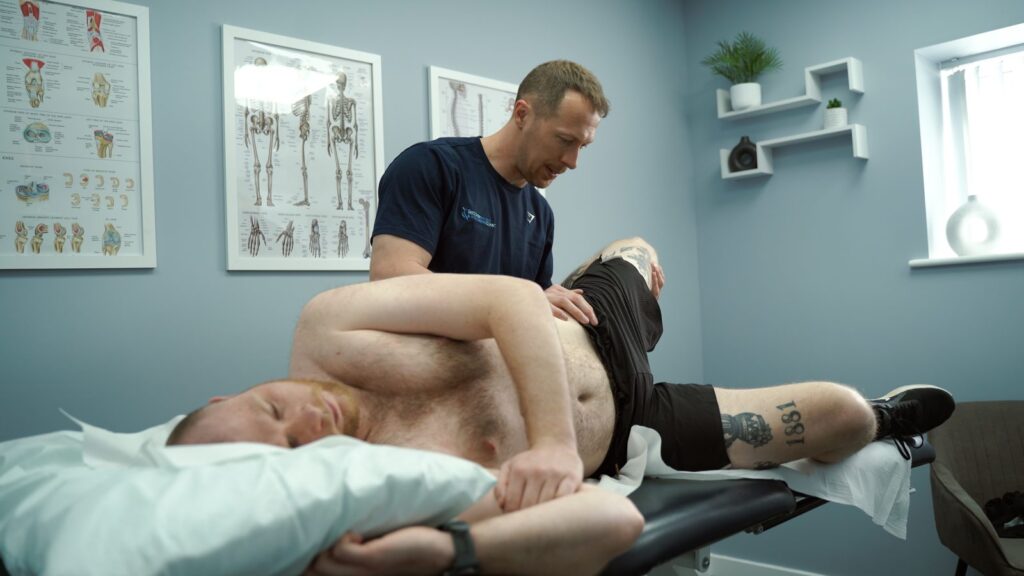
Physiotherapy for sciatica
We start with a thorough assessment to pin down the cause. Your therapist then works to ease the pressure on the sciatic nerve and shows you how to help stop it coming back.
Your treatment may include:
- Positional exercises to calm nerve irritation and pain
- Heat therapy
- Soft tissue massage
- Joint mobilisation to ease pain and stiffness
- A back exercise programme of strengthening and stretching to restore comfortable movement and support your spine
- Acupuncture to reduce muscle tension and pain
- Posture advice
Your physiotherapist at Recover Physio will build a rehab plan around you, to ease your pain and lower the chance of it coming back.